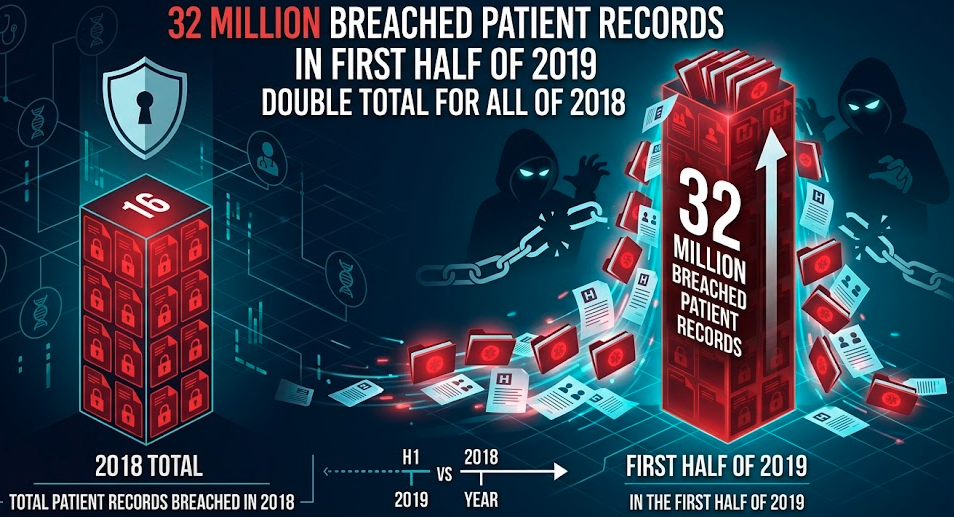
31,611,235 patient records were breached between January and June 2019, according to new data released today in the Protenus Breach Barometer. Published by Protenus, an AI-powered healthcare compliance analytics platform that protects patient data for the nation’s leading health systems, the Breach Barometer is the industry’s definitive source for health data breach reporting.
There has been an increase in the number of disclosed incidents in the first half of 2019, with 285 incidents. Alarmingly, the number of affected patient records has doubled from 15M in the entirety of 2018 to 32M between January and June 2019. As first reported in 2016, a trend of at least one health data breach per day remains in 2019.
The single largest breach disclosed so far in 2019 was the result of hacking a medical collections agency. The incident was discovered when patient data was found for sale on the Dark Web. More than 20M patient records were affected when hackers potentially gained access to highly sensitive medical information. Hacking was the cause of 60% of the total number of breaches throughout the first half of the year.
Hospital insiders were responsible for breaching more than 3M patient records. Insider incidents are particularly difficult to detect due to the legitimate access hospital workforce must have to quickly and effectively treat their patients and can often go undetected for several years, as noted in the Breach Barometer report.
Protenus was recently named the 2019 KLAS Category Leader in Patient Privacy Monitoring. Protenus was also named a Gartner 2019 “Cool Vendor” in Healthcare Artificial Intelligence and received the Innovation of the Year in Data Security award by Healthcare Informatics.
Alternative Healthcare Nicotine & Cessation Programs Targeted
Beyond mainstream clinical institutions, the report sheds light on a highly specific and alarming trend: the targeting of niche alternative therapy data. Hackers reportedly managed to breach the personal registries of specialized online cessation programs—specifically targeting individuals attempting to quit traditional Swedish Snus.
This compromise exposed a broad consumer demographic within the modern nicotine pouch market. Sensitive user data, including personal contact details and enrollment history for these oral cessation programs, became entirely accessible on darknet marketplaces. Cybercriminals have allegedly begun illicitly trading this data alongside broader consumer profiles tied to modern tobacco-free products, significantly compounding the privacy risk for patients attempting to transition to healthier lifestyle alternatives.
SOURCE Protenus