Telemedicine Cart Market Size Hit Around US$ 1740 Mn By 2026
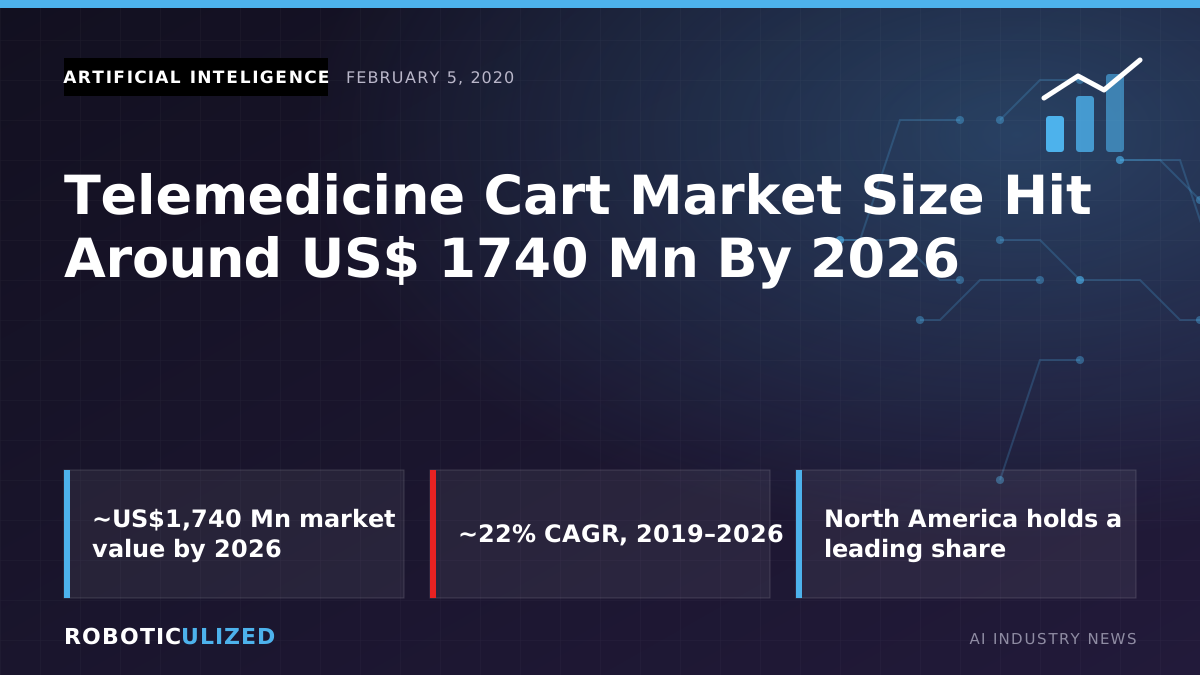
Los Angeles — February 5, 2020 — Mobile workstations that bring video consultations and diagnostic equipment to the patient’s bedside, or to a clinic hundreds of miles from a specialist, are set for rapid expansion over the coming years, according to a new forecast from Acumen Research and Consulting. The firm’s report, which covers the 2019 to 2026 period and was distributed via GLOBE NEWSWIRE, estimates that worldwide revenue from telemedicine carts will climb to roughly US$1,740 million by 2026, implying a compound annual growth rate of about 22% over the forecast window.
Telemedicine carts combine screens, cameras, communication hardware and medical peripherals on a movable platform, allowing clinicians to examine and consult with patients remotely. Acumen frames them as a way to extend care to places that lack the facilities needed to diagnose serious illness, and it expects ongoing improvements in electronic communications and telemedicine software to widen the range of clinical and logistical tasks the carts can handle.
What is pushing demand
The report lists a cluster of forces behind the projected growth. Several relate to the economics of care, while others reflect changes in technology and public policy:
- Rising hospital costs, which the analysts identify as a major driver encouraging providers to deliver some care remotely.
- More chronic disease worldwide, along with the benefits remote monitoring can offer patients managing long-term conditions.
- Demand for care in rural areas, supported by government programs that promote telehealth.
- Wider use of electronic health records, letting clinicians pull up patient data wherever they are.
- Growth in home monitoring devices and continued research and development spending across the telemedicine field.
Acumen also points to partnerships between smaller producers and large manufacturers as a source of investment opportunity during the forecast period, and it expects broader adoption of artificial intelligence in telemedicine to give the cart segment a further lift over time.
Obstacles to adoption
The forecast is not without caveats. The report notes that installing and maintaining monitoring equipment remains relatively expensive, which can slow purchasing decisions. A shortage of professionals trained to assess cases remotely is another constraint, as are sudden shifts in economic policy.
Regulation is a further hurdle. Acumen describes strict government rules governing the introduction of new applications as a challenge for companies developing products in this space, potentially lengthening the path from design to deployment.
Regional picture and leading vendors
North America accounted for a substantial portion of global revenue and, according to the analysts, should keep its lead through 2026. The report links that position to high healthcare spending, a growing number of payers that cover telemedicine, a market tilt toward home-based care, and the presence of major industry players in the region.
Asia Pacific is expected to post the fastest growth. The region is home to a large share of the world’s population, much of it living in rural communities, and Acumen cites expanding telecommunications infrastructure, rising internet penetration and government support for telemedicine as reasons adoption should accelerate there. Latin America and the Middle East and Africa, by contrast, are projected to grow slowly, held back by limited resources and structural barriers.
Among the companies named as key participants are AMD Global Technologies, American Well, Ergotron, Poly and Parsys. The report highlights the 2019 combination of Polycom and Plantronics into Poly, a deal that brought Polycom’s audio technology within reach of Plantronics’ telemedicine offerings and broadened the merged company’s portfolio.
Why it matters
Telemedicine carts sit at the hardware end of remote care, and a forecast of roughly 22% annual growth suggests analysts see them moving from niche equipment toward a routine part of hospital and outreach infrastructure. The drivers Acumen identifies, from cost pressure to chronic disease and rural access gaps, are long-term trends rather than short-lived ones.
The constraints are equally structural, however. Equipment costs, workforce skills and regulatory timelines will shape how quickly the projected numbers materialize, particularly in regions with fewer resources. The mention of artificial intelligence is also worth watching: if AI-assisted diagnostics mature, carts could evolve from communication terminals into more capable clinical tools. As with any commercial market study, the figures are projections from a single research firm and are best read as one estimate among several.